TargetAllDomainObjects - A python wrapper to run a command on against all users/computers/DCs of a Windows Domain

Overview

TargetAllDomainObjects

A python wrapper to run a command on against all users/computers/DCs of a Windows Domain
GitHub release (latest by date)

Features

  • Automatically gets the list of all users/computers/DCs from the domain controller's LDAP.
  • Multithreaded command execution.
  • Saves the output of the commands to a file.

Usage

$ ./TargetAllDomainObjects.py -h          
Impacket v0.9.25.dev1+20220105.151306.10e53952 - Copyright 2021 SecureAuth Corporation

usage: TargetAllDomainObjects.py [-h] -c COMMAND [-ts] [--use-ldaps] [-q] [-debug] [-colors] [-t THREADS] [-o OUTPUT_FILE] --dc-ip ip address [-d DOMAIN]
                                 [-u USER] [--no-pass | -p PASSWORD | -H [LMHASH:]NTHASH | --aes-key hex key] [-k]
                                 targetobject

Wrapper to run a command on against all users/computers/DCs of a Windows Domain.

positional arguments:
  targetobject          Target object (user, computer, domaincontroller)

optional arguments:
  -h, --help            show this help message and exit
  -c COMMAND, --command COMMAND
                        Command to launch, with {target} where the target should be placed.
  -ts                   Adds timestamp to every logging output
  --use-ldaps           Use LDAPS instead of LDAP
  -q, --quiet           show no information at all
  -debug                Debug mode
  -colors               Colored output mode
  -t THREADS, --threads THREADS
                        Number of threads (default: 5)
  -o OUTPUT_FILE, --output-file OUTPUT_FILE
                        Output file to store the results in. (default: shares.json)

authentication & connection:
  --dc-ip ip address    IP Address of the domain controller or KDC (Key Distribution Center) for Kerberos. If omitted it will use the domain part (FQDN)
                        specified in the identity parameter
  -d DOMAIN, --domain DOMAIN
                        (FQDN) domain to authenticate to
  -u USER, --user USER  user to authenticate with

  --no-pass             Don't ask for password (useful for -k)
  -p PASSWORD, --password PASSWORD
                        Password to authenticate with
  -H [LMHASH:]NTHASH, --hashes [LMHASH:]NTHASH
                        NT/LM hashes, format is LMhash:NThash
  --aes-key hex key     AES key to use for Kerberos Authentication (128 or 256 bits)
  -k, --kerberos        Use Kerberos authentication. Grabs credentials from .ccache file (KRB5CCNAME) based on target parameters. If valid credentials
                        cannot be found, it will use the ones specified in the command line
                      

Demo

Contributing

Pull requests are welcome. Feel free to open an issue if you want to add other features.

You might also like...
A Pytorch Implementation of [Source data‐free domain adaptation of object detector through domain

A Pytorch Implementation of Source data‐free domain adaptation of object detector through domain‐specific perturbation Please follow Faster R-CNN and

Fake-user-agent-traffic-geneator - Python CLI Tool to generate fake traffic against URLs with configurable user-agents

Fake traffic generator for Gartner Demo Generate fake traffic to URLs with custo

Code for the paper: Adversarial Training Against Location-Optimized Adversarial Patches. ECCV-W 2020.

Adversarial Training Against Location-Optimized Adversarial Patches arXiv | Paper | Code | Video | Slides Code for the paper: Sukrut Rao, David Stutz,

Protect against subdomain takeover

domain-protect scans Amazon Route53 across an AWS Organization for domain records vulnerable to takeover deploy to security audit account scan your en

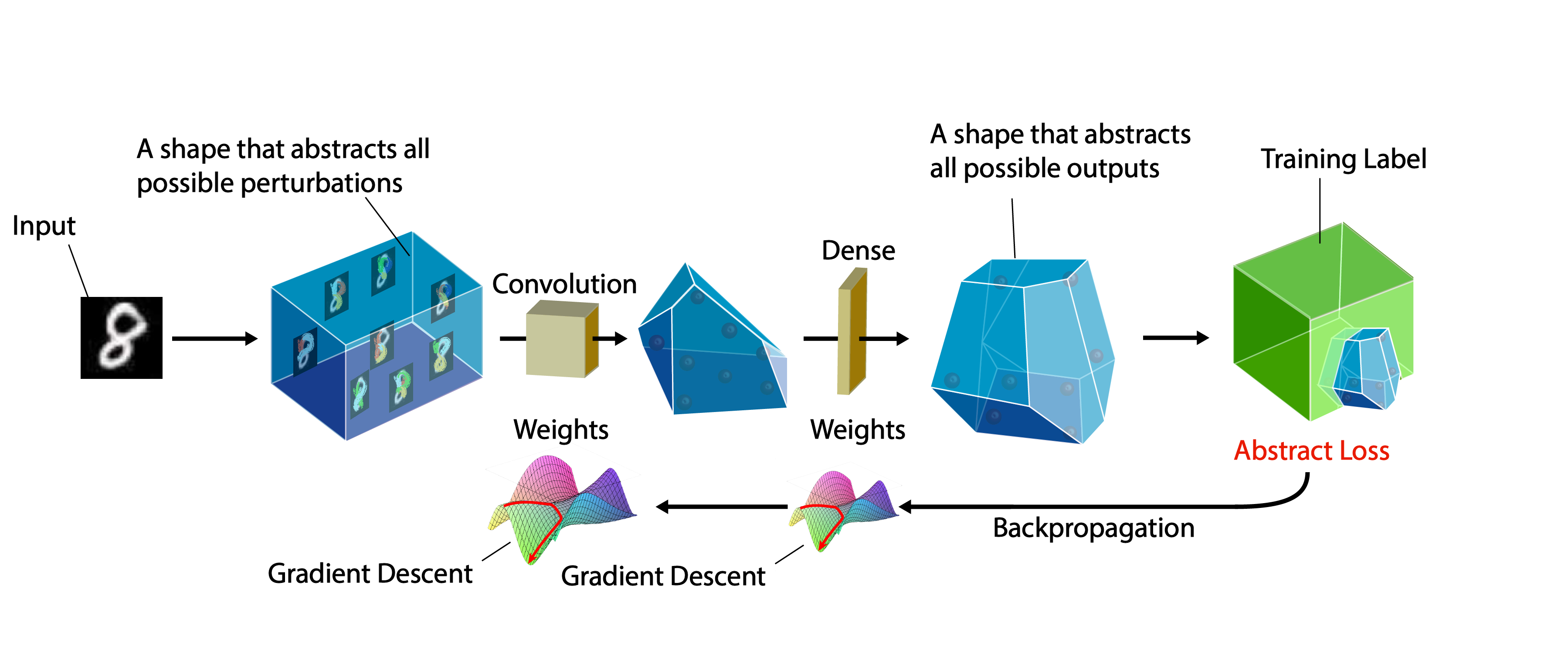
A certifiable defense against adversarial examples by training neural networks to be provably robust

DiffAI v3 DiffAI is a system for training neural networks to be provably robust and for proving that they are robust. The system was developed for the

Defending graph neural networks against adversarial attacks (NeurIPS 2020)

GNNGuard: Defending Graph Neural Networks against Adversarial Attacks Authors: Xiang Zhang ([email protected]), Marinka Zitnik ([email protected].

G-NIA model from
G-NIA model from "Single Node Injection Attack against Graph Neural Networks" (CIKM 2021)

Single Node Injection Attack against Graph Neural Networks This repository is our Pytorch implementation of our paper: Single Node Injection Attack ag

RL-driven agent playing tic-tac-toe on starknet against challengers.

tictactoe-on-starknet RL-driven agent playing tic-tac-toe on starknet against challengers. GUI reference: https://pythonguides.com/create-a-game-using

Cards Against Humanity AI

cah-ai This is a Cards Against Humanity AI implemented using a pre-trained Semantic Search model. How it works A player is described by a combination

Releases(1.1)
Owner
Podalirius
Security Researcher 🕵️‍♂️ | Speaker 📣
Podalirius
My implementation of DeepMind's Perceiver

DeepMind Perceiver (in PyTorch) Disclaimer: This is not official and I'm not affiliated with DeepMind. My implementation of the Perceiver: General Per

Louis Arge 55 Dec 12, 2022
Adversarial Robustness Toolbox (ART) - Python Library for Machine Learning Security - Evasion, Poisoning, Extraction, Inference - Red and Blue Teams

Adversarial Robustness Toolbox (ART) is a Python library for Machine Learning Security. ART provides tools that enable developers and researchers to defend and evaluate Machine Learning models and ap

3.4k Jan 04, 2023
R-Drop: Regularized Dropout for Neural Networks

R-Drop: Regularized Dropout for Neural Networks R-drop is a simple yet very effective regularization method built upon dropout, by minimizing the bidi

756 Dec 27, 2022
A general-purpose programming language, focused on simplicity, safety and stability.

The Rivet programming language A general-purpose programming language, focused on simplicity, safety and stability. Rivet's goal is to be a very power

The Rivet programming language 17 Dec 29, 2022
Unofficial Alias-Free GAN implementation. Based on rosinality's version with expanded training and inference options.

Alias-Free GAN An unofficial version of Alias-Free Generative Adversarial Networks (https://arxiv.org/abs/2106.12423). This repository was heavily bas

dusk (they/them) 75 Dec 12, 2022
Specification language for generating Generalized Linear Models (with or without mixed effects) from conceptual models

tisane Tisane: Authoring Statistical Models via Formal Reasoning from Conceptual and Data Relationships TL;DR: Analysts can use Tisane to author gener

Eunice Jun 11 Nov 15, 2022
Using modified BiSeNet for face parsing in PyTorch

face-parsing.PyTorch Contents Training Demo References Training Prepare training data: -- download CelebAMask-HQ dataset -- change file path in the pr

zll 1.6k Jan 08, 2023
Benchmark VAE - Library for Variational Autoencoder benchmarking

Documentation pythae This library implements some of the most common (Variational) Autoencoder models. In particular it provides the possibility to pe

1.1k Jan 02, 2023
Dataset VSD4K includes 6 popular categories: game, sport, dance, vlog, interview and city.

CaFM-pytorch ICCV ACCEPT Introduction of dataset VSD4K Our dataset VSD4K includes 6 popular categories: game, sport, dance, vlog, interview and city.

96 Jul 05, 2022
Keras documentation, hosted live at keras.io

Keras.io documentation generator This repository hosts the code used to generate the keras.io website. Generating a local copy of the website pip inst

Keras 2k Jan 08, 2023
Classifying cat and dog images using Kaggle dataset

PyTorch Image Classification Classifies an image as containing either a dog or a cat (using Kaggle's public dataset), but could easily be extended to

Robert Coleman 74 Nov 22, 2022
TGRNet: A Table Graph Reconstruction Network for Table Structure Recognition

TGRNet: A Table Graph Reconstruction Network for Table Structure Recognition Xue, Wenyuan, et al. "TGRNet: A Table Graph Reconstruction Network for Ta

Wenyuan 68 Jan 04, 2023
Learning Domain Invariant Representations in Goal-conditioned Block MDPs

Learning Domain Invariant Representations in Goal-conditioned Block MDPs Beining Han, Chongyi Zheng, Harris Chan, Keiran Paster, Michael R. Zhang, Jim

Chongyi Zheng 3 Apr 12, 2022
KITTI-360 Annotation Tool is a framework that developed based on python(cherrypy + jinja2 + sqlite3) as the server end and javascript + WebGL as the front end.

KITTI-360 Annotation Tool is a framework that developed based on python(cherrypy + jinja2 + sqlite3) as the server end and javascript + WebGL as the front end.

86 Dec 12, 2022
Simulation of moving particles under microscopic imaging

Simulation of moving particles under microscopic imaging Install scipy numpy scikit-image tiffile Run python simulation.py Read result https://imagej

Zehao Wang 2 Dec 14, 2021
Simple image captioning model - CLIP prefix captioning.

Simple image captioning model - CLIP prefix captioning.

688 Jan 04, 2023
Syllabic Quantity Patterns as Rhythmic Features for Latin Authorship Attribution

Syllabic Quantity Patterns as Rhythmic Features for Latin Authorship Attribution Abstract Within the Latin (and ancient Greek) production, it is well

4 Dec 03, 2022
VLG-Net: Video-Language Graph Matching Networks for Video Grounding

VLG-Net: Video-Language Graph Matching Networks for Video Grounding Introduction Official repository for VLG-Net: Video-Language Graph Matching Networ

Mattia Soldan 25 Dec 04, 2022
Code for ICCV 2021 paper: ARAPReg: An As-Rigid-As Possible Regularization Loss for Learning Deformable Shape Generators..

ARAPReg Code for ICCV 2021 paper: ARAPReg: An As-Rigid-As Possible Regularization Loss for Learning Deformable Shape Generators.. Installation The cod

Bo Sun 132 Nov 28, 2022
ICLR 2021, Fair Mixup: Fairness via Interpolation

Fair Mixup: Fairness via Interpolation Training classifiers under fairness constraints such as group fairness, regularizes the disparities of predicti

Ching-Yao Chuang 49 Nov 22, 2022