Supporting code for "Autoregressive neural-network wavefunctions for ab initio quantum chemistry".

Overview

naqs-for-quantum-chemistry


Generic badge MIT License


This repository contains the codebase developed for the paper Autoregressive neural-network wavefunctions for ab initio quantum chemistry.


(a) Architecture of a neural autoregressive quantum state (NAQS) (b) Energy surface of N2

TL;DR

Certain parts of the notebooks relating to generating molecular data are currently not working due to updates to the underlying OpenFermion and Psi4 packages (I'll fix it!) - however the experimental results of NAQS can still be reproduced as we also provide pre-generated data in this repository.

If you don't care for now, and you just want to see it running, here are two links to notebooks that will set-up and run on Colab. Just note that Colab will not have enough memory to run experiments on the largest molecules we considered.

  • run_naqs.ipynb Open In Colab: Run individual experiments or batches of experiments, including those to recreate published results.

  • generate_molecular_data_and_baselines.ipynb Open In Colab:

    1. Create the [molecule].hdf5 and [molecule]_qubit_hamiltonian.pkl files required (these are provided for molecules used in the paper in the molecules directory.)
    2. Solve these molecules using various canconical QC methods using Psi4.

Overview

Quantum chemistry with neural networks

A grand challenge of ab-inito quantum chemistry (QC) is to solve the many-body Schrodinger equation describing interaction of heavy nuclei and orbiting electrons. Unfortunatley, this is an extremely (read, NP) hard problem, and so a significant amout of research effort has, and continues, to be directed towards numerical methods in QC. Typically, these methods work by optimising the wavefunction in a basis set of "Slater determinants". (In practice these are anti-symetterised tensor products of single-electron orbitals, but for our purposes let's not worry about the details.) Typically, the number of Slater determinants - and so the complexity of optimisation - grows exponentially with the system size, but recently machine learning (ML) has emerged as a possible tool with which to tackle this seemingly intractable scaling issue.

Translation/disclaimer: we can use ML and it has displayed some promising properties, but right now the SOTA results still belong to the established numerical methods (e.g. coupled-cluster) in practical settings.

Project summary

We follow the approach proposed by Choo et al. to map the exponentially complex system of interacting fermions to an equivilent (and still exponentially large) system of interacting qubits (see their or our paper for details). The advantage being that we can then apply neural network quantum states (NNQS) originally developed for condensed matter physics (CMP) (with distinguishable interacting particles) to the electron structure calculations (with indistinguishable electrons and fermionic anti-symettries).

This project proposes that simply applying techniques from CMP to QC will inevitably fail to take advantage of our significant a priori knowledge of molecular systems. Moreover, the stochastic optimisation of NNQS relies on repeatedly sampling the wavefunction, which can be prohibitively expensive. This project is a sandbox for trialling different NNQS, in particular an ansatz based on autoregressive neural networks that we present in the paper. The major benefits of our approach are that it:

  1. allows for highly efficient sampling, especially of the highly asymmetric wavefunction typical found in QC,
  2. allows for physical priors - such as conservation of electron number, overall spin and possible symettries - to be embedded into the network without sacrificing expressibility.

Getting started

In this repo

notebooks
  • run_naqs.ipynb Open In Colab: Run individual experiments or batches of experiments, including those to recreate published results.

  • generate_molecular_data_and_baselines.ipynb Open In Colab:

    1. Create the [molecule].hdf5 and [molecule]_qubit_hamiltonian.pkl files required (these are provided for molecules used in the paper in the molecules directory.)
    2. Solve these molecules using various canconical QC methods using Psi4.
experiments

Experimental scripts, including those to reproduced published results, for NAQS and Psi4.

molecules

The molecular data required to reproduce published results.

src / src_cpp

Python and cython source code for the main codebase and fast calculations, respectively.

Running experiments

Further details are provided in the run_naqs.ipynb notebook, however the published experiments can be run using the provided batch scripts.

>>> experiments/bash/naqs/batch_train.sh 0 LiH

Here, 0 is the GPU number to use (if one is available, otherwise the CPU will be used by default) and LiH can be replaced by any folder in the molecules directory. Similarly, the experimental ablations can be run using the corresponding bash scripts.

>>> experiments/bash/naqs/batch_train_no_amp_sym.sh 0 LiH
>>> experiments/bash/naqs/batch_train_no_mask.sh 0 LiH
>>> experiments/bash/naqs/batch_train_full_mask.sh 0 LiH

Requirements

The underlying neural networks require PyTorch. The molecular systems are typically handled by OpenFermion with the backend calculations and baselines requiring and Psi4. Note that this code expects OpenFermion 0.11.0 and will need refactoring to work with newer versions. Otherwise, all other required packages - numpy, matplotlib, seaborn if you want pretty plots etc - are standard. However, to be concrete, the linked Colab notebooks will provide an environment in which the code can be run.

Reference

If you find this project or the associated paper useful, it can be cited as below.

@article{barrett2021autoregressive,
  title={Autoregressive neural-network wavefunctions for ab initio quantum chemistry},
  author={Barrett, Thomas D and Malyshev, Aleksei and Lvovsky, AI},
  journal={arXiv preprint arXiv:2109.12606},
  year={2021}
}
You might also like...
TensorFlow code for the neural network presented in the paper:
TensorFlow code for the neural network presented in the paper: "Structural Language Models of Code" (ICML'2020)

SLM: Structural Language Models of Code This is an official implementation of the model described in: "Structural Language Models of Code" [PDF] To ap

Inference code for "StylePeople: A Generative Model of Fullbody Human Avatars" paper. This code is for the part of the paper describing video-based avatars.

NeuralTextures This is repository with inference code for paper "StylePeople: A Generative Model of Fullbody Human Avatars" (CVPR21). This code is for

A code generator from ONNX to PyTorch code

onnx-pytorch Generating pytorch code from ONNX. Currently support onnx==1.9.0 and torch==1.8.1. Installation From PyPI pip install onnx-pytorch From

This is the code for our KILT leaderboard submission to the T-REx and zsRE tasks. It includes code for training a DPR model then continuing training with RAG.

KGI (Knowledge Graph Induction) for slot filling This is the code for our KILT leaderboard submission to the T-REx and zsRE tasks. It includes code fo

Convert Python 3 code to CUDA code.

Py2CUDA Convert python code to CUDA. Usage To convert a python file say named py_file.py to CUDA, run python generate_cuda.py --file py_file.py --arch

Empirical Study of Transformers for Source Code & A Simple Approach for Handling Out-of-Vocabulary Identifiers in Deep Learning for Source Code

Transformers for variable misuse, function naming and code completion tasks The official PyTorch implementation of: Empirical Study of Transformers fo

Reference implementation of code generation projects from Facebook AI Research. General toolkit to apply machine learning to code, from dataset creation to model training and evaluation. Comes with pretrained models.

This repository is a toolkit to do machine learning for programming languages. It implements tokenization, dataset preprocessing, model training and m

Code for the prototype tool in our paper "CoProtector: Protect Open-Source Code against Unauthorized Training Usage with Data Poisoning".

CoProtector Code for the prototype tool in our paper "CoProtector: Protect Open-Source Code against Unauthorized Training Usage with Data Poisoning".

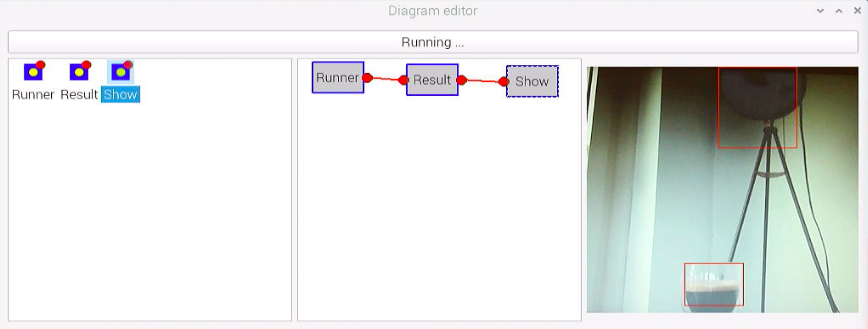
Low-code/No-code approach for deep learning inference on devices

EzEdgeAI A concept project that uses a low-code/no-code approach to implement deep learning inference on devices. It provides a componentized framewor

Comments
  • pip installation

    pip installation

    Great code. It runs very smoothly and clearly outperforms the results in Choo et al. Would you consider re-engineering the code slightly to allow for a pipy installation?

    opened by kastoryano 0
Releases(v1.0.0)
Owner
Tom Barrett
Research Scientist @ InstaDeep, formerly postdoctoral researcher @ Oxford. RL, GNN's, quantum physics, optical computing and the intersection thereof.
Tom Barrett
This is a classifier which basically predicts whether there is a gun law in a state or not, depending on various things like murder rates etc.

Gun-Laws-Classifier This is a classifier which basically predicts whether there is a gun law in a state or not, depending on various things like murde

Awais Saleem 1 Jan 20, 2022
Learning multiple gaits of quadruped robot using hierarchical reinforcement learning

Learning multiple gaits of quadruped robot using hierarchical reinforcement learning We propose a method to learn multiple gaits of quadruped robot us

Yunho Kim 17 Dec 11, 2022
CONditionals for Ordinal Regression and classification in PyTorch

CONDOR pytorch implementation for ordinal regression with deep neural networks. Documentation: https://GarrettJenkinson.github.io/condor_pytorch About

7 Jul 25, 2022
Construct a neural network frame by Numpy

本项目的CSDN博客链接:https://blog.csdn.net/weixin_41578567/article/details/111482022 1. 概览 本项目主要用于神经网络的学习,通过基于numpy的实现,了解神经网络底层前向传播、反向传播以及各类优化器的原理。 该项目目前已实现的功

24 Jan 22, 2022
Repository for GNSS-based position estimation using a Deep Neural Network

Code repository accompanying our work on 'Improving GNSS Positioning using Neural Network-based Corrections'. In this paper, we present a Deep Neural

32 Dec 13, 2022
Code for the Higgs Boson Machine Learning Challenge organised by CERN & EPFL

A method to solve the Higgs boson challenge using Least Squares - Novae This project is the Project 1 of EPFL CS-433 Machine Learning. The project is

Giacomo Orsi 1 Nov 09, 2021
2D Human Pose estimation using transformers. Implementation in Pytorch

PE-former: Pose Estimation Transformer Vision transformer architectures perform very well for image classification tasks. Efforts to solve more challe

Panteleris Paschalis 23 Oct 17, 2022
A PyTorch implementation of DenseNet.

A PyTorch Implementation of DenseNet This is a PyTorch implementation of the DenseNet-BC architecture as described in the paper Densely Connected Conv

Brandon Amos 771 Dec 15, 2022
Hi Guys, here I am providing examples, which will help you in Lerarning Python

LearningPython Hi guys, here I am trying to include as many practice examples of Python Language, as i Myself learn, and hope these will help you in t

4 Feb 03, 2022
[CVPRW 2021] Code for Region-Adaptive Deformable Network for Image Quality Assessment

RADN [CVPRW 2021] Code for Region-Adaptive Deformable Network for Image Quality Assessment [Paper on arXiv] Overview Update [2021/5/7] add codes for W

IIGROUP 53 Dec 28, 2022
Trains an agent with stochastic policy gradient ascent to solve the Lunar Lander challenge from OpenAI

Introduction This script trains an agent with stochastic policy gradient ascent to solve the Lunar Lander challenge from OpenAI. In order to run this

Momin Haider 0 Jan 02, 2022
Rendering Point Clouds with Compute Shaders

Compute Shader Based Point Cloud Rendering This repository contains the source code to our techreport: Rendering Point Clouds with Compute Shaders and

Markus Schütz 460 Jan 05, 2023
Implementation of average- and worst-case robust flatness measures for adversarial training.

Relating Adversarially Robust Generalization to Flat Minima This repository contains code corresponding to the MLSys'21 paper: D. Stutz, M. Hein, B. S

David Stutz 13 Nov 27, 2022
deep-table implements various state-of-the-art deep learning and self-supervised learning algorithms for tabular data using PyTorch.

deep-table implements various state-of-the-art deep learning and self-supervised learning algorithms for tabular data using PyTorch.

63 Oct 17, 2022
Official Repository for the ICCV 2021 paper "PixelSynth: Generating a 3D-Consistent Experience from a Single Image"

PixelSynth: Generating a 3D-Consistent Experience from a Single Image (ICCV 2021) Chris Rockwell, David F. Fouhey, and Justin Johnson [Project Website

Chris Rockwell 95 Nov 22, 2022
Training neural models with structured signals.

Neural Structured Learning in TensorFlow Neural Structured Learning (NSL) is a new learning paradigm to train neural networks by leveraging structured

955 Jan 02, 2023
In this repo we reproduce and extend results of Learning in High Dimension Always Amounts to Extrapolation by Balestriero et al. 2021

In this repo we reproduce and extend results of Learning in High Dimension Always Amounts to Extrapolation by Balestriero et al. 2021. Balestriero et

Sean M. Hendryx 1 Jan 27, 2022
LoFTR:Detector-Free Local Feature Matching with Transformers CVPR 2021

LoFTR-with-train-script LoFTR:Detector-Free Local Feature Matching with Transformers CVPR 2021 (with train script --- unofficial ---). About Megadepth

Nan Xiaohu 15 Nov 04, 2022
Final report with code for KAIST Course KSE 801.

Orthogonal collocation is a method for the numerical solution of partial differential equations

Chuanbo HUA 4 Apr 06, 2022
Pytorch implementation for DFN: Distributed Feedback Network for Single-Image Deraining.

DFN:Distributed Feedback Network for Single-Image Deraining Abstract Recently, deep convolutional neural networks have achieved great success for sing

6 Nov 05, 2022