Multi agent DDPG algorithm written in Python + Pytorch

Overview

Project 3: Collaboration and Competition

Project Details

For this project, you will work with the Tennis environment.

Trained Agent

In this environment, two agents control rackets to bounce a ball over a net. If an agent hits the ball over the net, it receives a reward of +0.1. If an agent lets a ball hit the ground or hits the ball out of bounds, it receives a reward of -0.01. Thus, the goal of each agent is to keep the ball in play.

The observation space consists of 8 variables corresponding to the position and velocity of the ball and racket. Each agent receives its own, local observation. Two continuous actions are available, corresponding to movement toward (or away from) the net, and jumping.

The task is episodic, and in order to solve the environment, your agents must get an average score of +0.5 (over 100 consecutive episodes, after taking the maximum over both agents). Specifically,

  • After each episode, we add up the rewards that each agent received (without discounting), to get a score for each agent. This yields 2 (potentially different) scores. We then take the maximum of these 2 scores.
  • This yields a single score for each episode.

The environment is considered solved, when the average (over 100 episodes) of those scores is at least +0.5.

Getting Started

Dependencies

To set up your python environment to run the code in the notebook, follow the instructions below.

  1. Create (and activate) a new environment with Python 3.6.

    • Linux or Mac:
    conda create --name drlnd python=3.6
    source activate drlnd
    • Windows:
    conda create --name drlnd python=3.6 
    activate drlnd
  2. Clone the repository, and navigate to the python/ folder. Then, install several dependencies.

git clone https://github.com/udacity/deep-reinforcement-learning.git
cd deep-reinforcement-learning/python
pip install .

Note: You may encounter issues with installing Pytorch 0.4.0. In that case, please replace the file python/requirements.txt with the file requirements.txt inside this project.

  1. Create an IPython kernel for the drlnd environment.
python -m ipykernel install --user --name drlnd --display-name "drlnd"
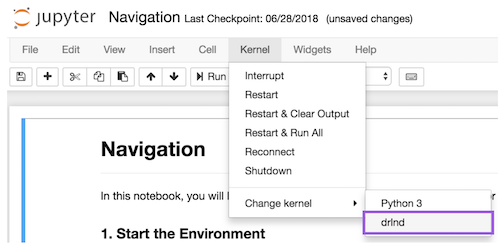
  1. Before running code in a notebook, change the kernel to match the drlnd environment by using the drop-down Kernel menu.

Kernel

Instructions

  1. Download the environment from one of the links below. You need only select the environment that matches your operating system:

    (For Windows users) Check out this link if you need help with determining if your computer is running a 32-bit version or 64-bit version of the Windows operating system.

    (For AWS) If you'd like to train the agent on AWS (and have not enabled a virtual screen), then please use this link to obtain the "headless" version of the environment. You will not be able to watch the agent without enabling a virtual screen, but you will be able to train the agent. (To watch the agent, you should follow the instructions to enable a virtual screen, and then download the environment for the Linux operating system above.)

  2. Place the extracted files in the same folder as the notebook Tennis.ipynb.

  3. Load the notebook with Jupyter notebook. (The command to start Jupyter notebook is jupyter notebook)

  4. Follow further instructions in the notebook.

You might also like...
Implementation of EMNLP 2017 Paper
Implementation of EMNLP 2017 Paper "Natural Language Does Not Emerge 'Naturally' in Multi-Agent Dialog" using PyTorch and ParlAI

Language Emergence in Multi Agent Dialog Code for the Paper Natural Language Does Not Emerge 'Naturally' in Multi-Agent Dialog Satwik Kottur, José M.

Implementation of EMNLP 2017 Paper
Implementation of EMNLP 2017 Paper "Natural Language Does Not Emerge 'Naturally' in Multi-Agent Dialog" using PyTorch and ParlAI

Language Emergence in Multi Agent Dialog Code for the Paper Natural Language Does Not Emerge 'Naturally' in Multi-Agent Dialog Satwik Kottur, José M.

Pytorch modules for paralel models with same architecture. Ideal for multi agent-based systems

WideLinears Pytorch parallel Neural Networks A package of pytorch modules for fast paralellization of separate deep neural networks. Ideal for agent-b

A lightweight Python-based 3D network multi-agent simulator. Uses a cell-based congestion model. Calculates risk, loudness and battery capacities of the agents. Suitable for 3D network optimization tasks.

AMAZ3DSim AMAZ3DSim is a lightweight python-based 3D network multi-agent simulator. It uses a cell-based congestion model. It calculates risk, battery

Spatial Intention Maps for Multi-Agent Mobile Manipulation (ICRA 2021)

spatial-intention-maps This code release accompanies the following paper: Spatial Intention Maps for Multi-Agent Mobile Manipulation Jimmy Wu, Xingyua

Rethinking the Importance of Implementation Tricks in Multi-Agent Reinforcement Learning

RIIT Our open-source code for RIIT: Rethinking the Importance of Implementation Tricks in Multi-AgentReinforcement Learning. We implement and standard

Official source code to CVPR'20 paper,
Official source code to CVPR'20 paper, "When2com: Multi-Agent Perception via Communication Graph Grouping"

When2com: Multi-Agent Perception via Communication Graph Grouping This is the PyTorch implementation of our paper: When2com: Multi-Agent Perception vi

Multi Agent Path Finding Algorithms

MATP-solver Simulator collision check path step random initial states or given states Traditional method Seperate A* algorithem Confict-based Search S

A parallel framework for population-based multi-agent reinforcement learning.

MALib: A parallel framework for population-based multi-agent reinforcement learning MALib is a parallel framework of population-based learning nested

Releases(v1.0.0)
Owner
Rogier Wachters
Rogier Wachters
Code for "Hierarchical Skills for Efficient Exploration" HSD-3 Algorithm and Baselines

Hierarchical Skills for Efficient Exploration This is the source code release for the paper Hierarchical Skills for Efficient Exploration. It contains

Facebook Research 38 Dec 06, 2022
For IBM Quantum Challenge 2021 (May 20 - 26)

IBM Quantum Challenge 2021 Introduction Commemorating the 40-year anniversary of the Physics of Computation conference, and 5-year anniversary of IBM

Qiskit Community 140 Jan 01, 2023
Multi-layer convolutional LSTM with Pytorch

Convolution_LSTM_pytorch Thanks for your attention. I haven't got time to maintain this repo for a long time. I recommend this repo which provides an

Zijie Zhuang 734 Jan 03, 2023
Using python and scikit-learn to make stock predictions

MachineLearningStocks in python: a starter project and guide EDIT as of Feb 2021: MachineLearningStocks is no longer actively maintained MachineLearni

Robert Martin 1.3k Dec 29, 2022
Repositório da disciplina de APC, no segundo semestre de 2021

NOTAS FINAIS: https://github.com/fabiommendes/apc2018/blob/master/nota-final.pdf Algoritmos e Programação de Computadores Este é o Git da disciplina A

16 Dec 16, 2022
Implementation of "Learning to Match Features with Seeded Graph Matching Network" ICCV2021

SGMNet Implementation PyTorch implementation of SGMNet for ICCV'21 paper "Learning to Match Features with Seeded Graph Matching Network", by Hongkai C

87 Dec 11, 2022
Subgraph Based Learning of Contextual Embedding

SLiCE Self-Supervised Learning of Contextual Embeddings for Link Prediction in Heterogeneous Networks Dataset details: We use four public benchmark da

Pacific Northwest National Laboratory 27 Dec 01, 2022
Reimplementation of the paper "Attention, Learn to Solve Routing Problems!" in jax/flax.

JAX + Attention Learn To Solve Routing Problems Reinplementation of the paper Attention, Learn to Solve Routing Problems! using Jax and Flax. Fully su

Gabriela Surita 7 Dec 01, 2022
A lightweight face-recognition toolbox and pipeline based on tensorflow-lite

FaceIDLight 📘 Description A lightweight face-recognition toolbox and pipeline based on tensorflow-lite with MTCNN-Face-Detection and ArcFace-Face-Rec

Martin Knoche 16 Dec 07, 2022
A style-based Quantum Generative Adversarial Network

Style-qGAN A style based Quantum Generative Adversarial Network (style-qGAN) model for Monte Carlo event generation. Tutorial We have prepared a noteb

9 Nov 24, 2022
Deep Learning for Natural Language Processing SS 2021 (TU Darmstadt)

Deep Learning for Natural Language Processing SS 2021 (TU Darmstadt) Task Training huge unsupervised deep neural networks yields to strong progress in

Oliver Hahn 1 Jan 26, 2022
Deep Reinforcement Learning based Trading Agent for Bitcoin

Deep Trading Agent Deep Reinforcement Learning based Trading Agent for Bitcoin using DeepSense Network for Q function approximation. For complete deta

Kartikay Garg 669 Dec 29, 2022
A data-driven maritime port simulator

PySeidon - A Data-Driven Maritime Port Simulator 🌊 Extendable and modular software for maritime port simulation. This software uses entity-component

6 Apr 10, 2022
python 93% acc. CNN Dogs Vs Cats ( Pytorch )

English | 简体中文(测试中...敬请期待) Cnn-Classification-Dog-Vs-Cat 猫狗辨别 (pytorch版本) CNN Resnet18 的猫狗分类器,基于ResNet及其变体网路系列,对于一般的图像识别任务表现优异,模型精准度高达93%(小型样本)。 项目制作于

apple ye 1 May 22, 2022
In Search of Probeable Generalization Measures

In Search of Probeable Generalization Measures Exciting News! In Search of Probeable Generalization Measures has been accepted to the International Co

Mahdi S. Hosseini 6 Sep 11, 2022
This YoloV5 based model is fit to detect people and different types of land vehicles, and displaying their density on a fitted map, according to their coordinates and detected labels.

This YoloV5 based model is fit to detect people and different types of land vehicles, and displaying their density on a fitted map, according to their

Liron Bdolah 8 May 22, 2022
A framework for GPU based high-performance medical image processing and visualization

FAST is an open-source cross-platform framework with the main goal of making it easier to do high-performance processing and visualization of medical images on heterogeneous systems utilizing both mu

Erik Smistad 315 Dec 30, 2022
Landmarks Recogntion Web application using Streamlit.

Landmark Recognition Web-App using Streamlit Watch Tutorial for this project Source Trained model landmarks_classifier_asia_V1/1 is taken from the Ten

Kushal Bhavsar 5 Dec 12, 2022
A Fast Sequence Transducer Implementation with PyTorch Bindings

transducer A Fast Sequence Transducer Implementation with PyTorch Bindings. The corresponding publication is Sequence Transduction with Recurrent Neur

Awni Hannun 184 Dec 18, 2022
UnsupervisedR&R: Unsupervised Pointcloud Registration via Differentiable Rendering

UnsupervisedR&R: Unsupervised Pointcloud Registration via Differentiable Rendering This repository holds all the code and data for our recent work on

Mohamed El Banani 118 Dec 06, 2022