A Lightweight Hyperparameter Optimization Tool ๐Ÿš€

Overview

Lightweight Hyperparameter Optimization ๐Ÿš€

Pyversions PyPI version Code style: black Colab

The mle-hyperopt package provides a simple and intuitive API for hyperparameter optimization of your Machine Learning Experiment (MLE) pipeline. It supports real, integer & categorical search variables and single- or multi-objective optimization.

Core features include the following:

  • API Simplicity: strategy.ask(), strategy.tell() interface & space definition.
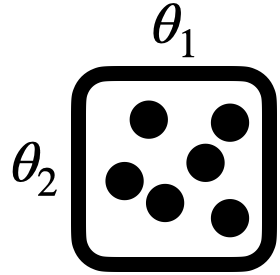
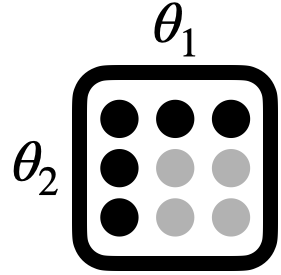
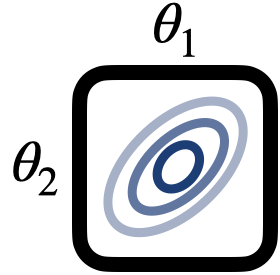
  • Strategy Diversity: Grid, random, coordinate search, SMBO & wrapping around FAIR's nevergrad.
  • Search Space Refinement based on the top performing configs via strategy.refine(top_k=10).
  • Export of configurations to execute via e.g. python train.py --config_fname config.yaml.
  • Storage & reload search logs via strategy.save( ) , strategy.load( ) .

For a quickstart check out the notebook blog ๐Ÿ“– .

The API ๐ŸŽฎ

from mle_hyperopt import RandomSearch

# Instantiate random search class
strategy = RandomSearch(real={"lrate": {"begin": 0.1,
                                        "end": 0.5,
                                        "prior": "log-uniform"}},
                        integer={"batch_size": {"begin": 32,
                                                "end": 128,
                                                "prior": "uniform"}},
                        categorical={"arch": ["mlp", "cnn"]})

# Simple ask - eval - tell API
configs = strategy.ask(5)
values = [train_network(**c) for c in configs]
strategy.tell(configs, values)

Implemented Search Types ๐Ÿ”ญ

Search Type Description search_config
drawing GridSearch Search over list of discrete values -
drawing RandomSearch Random search over variable ranges refine_after, refine_top_k
drawing CoordinateSearch Coordinate-wise optimization with fixed defaults order, defaults
drawing SMBOSearch Sequential model-based optimization base_estimator, acq_function, n_initial_points
drawing NevergradSearch Multi-objective nevergrad wrapper optimizer, budget_size, num_workers

Variable Types & Hyperparameter Spaces ๐ŸŒ

Variable Type Space Specification
drawing real Real-valued Dict: begin, end, prior/bins (grid)
drawing integer Integer-valued Dict: begin, end, prior/bins (grid)
drawing categorical Categorical List: Values to search over

Installation โณ

A PyPI installation is available via:

pip install mle-hyperopt

Alternatively, you can clone this repository and afterwards 'manually' install it:

git clone https://github.com/RobertTLange/mle-hyperopt.git
cd mle-hyperopt
pip install -e .

Further Options ๐Ÿšด

Saving & Reloading Logs ๐Ÿช

# Storing & reloading of results from .pkl
strategy.save("search_log.json")
strategy = RandomSearch(..., reload_path="search_log.json")

# Or manually add info after class instantiation
strategy = RandomSearch(...)
strategy.load("search_log.json")

Search Decorator ๐Ÿงถ

from mle_hyperopt import hyperopt

@hyperopt(strategy_type="grid",
          num_search_iters=25,
          real={"x": {"begin": 0., "end": 0.5, "bins": 5},
                "y": {"begin": 0, "end": 0.5, "bins": 5}})
def circle(config):
    distance = abs((config["x"] ** 2 + config["y"] ** 2))
    return distance

strategy = circle()

Storing Configuration Files ๐Ÿ“‘

# Store 2 proposed configurations - eval_0.yaml, eval_1.yaml
strategy.ask(2, store=True)
# Store with explicit configuration filenames - conf_0.yaml, conf_1.yaml
strategy.ask(2, store=True, config_fnames=["conf_0.yaml", "conf_1.yaml"])

Retrieving Top Performers & Visualizing Results ๐Ÿ“‰

# Get the top k best performing configurations
id, configs, values = strategy.get_best(top_k=4)

# Plot timeseries of best performing score over search iterations
strategy.plot_best()

# Print out ranking of best performers
strategy.print_ranking(top_k=3)

Refining the Search Space of Your Strategy ๐Ÿช“

# Refine the search space after 5 & 10 iterations based on top 2 configurations
strategy = RandomSearch(real={"lrate": {"begin": 0.1,
                                        "end": 0.5,
                                        "prior": "log-uniform"}},
                        integer={"batch_size": {"begin": 1,
                                                "end": 5,
                                                "prior": "uniform"}},
                        categorical={"arch": ["mlp", "cnn"]},
                        search_config={"refine_after": [5, 10],
                                       "refine_top_k": 2})

# Or do so manually using `refine` method
strategy.tell(...)
strategy.refine(top_k=2)

Note that the search space refinement is only implemented for random, SMBO and nevergrad-based search strategies.

Development & Milestones for Next Release

You can run the test suite via python -m pytest -vv tests/. If you find a bug or are missing your favourite feature, feel free to contact me @RobertTLange or create an issue ๐Ÿค— .

Comments
  • [FEATURE] Hyperband

    [FEATURE] Hyperband

    Hi! I was wondering if the Hyperband hyperparameter algorithm is something you want implemented.

    I'm willing to spend some time working on it if there's interest.

    opened by colligant 5
  • [FEATURE] Option to pickle the whole strategy

    [FEATURE] Option to pickle the whole strategy

    Right now strategy.save produces a JSON with the log. Any reason you didn't opt for (or have an option of) pickling the whole strategy? Two motivations for this:

    1. Not having to re-init the strategy with all the args/kwargs
    2. Not having to loop through tell! SMBO can take quite some time to do this.
    opened by alexander-soare 4
  • Type checking strategy.log could be made more flexible?

    Type checking strategy.log could be made more flexible?

    Yay first issue! Congrats Robert, this is a great interface. Haven't used a hyperopt library in a while and this felt so easy to pick up.


    For example https://github.com/RobertTLange/mle-hyperopt/blob/57eb806e95c854f48f8faac2b2dc182d2180d393/mle_hyperopt/search.py#L251

    raises an error if my objective is numpy.float64. Also noticed https://github.com/RobertTLange/mle-hyperopt/blob/57eb806e95c854f48f8faac2b2dc182d2180d393/mle_hyperopt/search.py#L206

    Could we just have

    isinstance(strategy.log[0]['objective'], (float, int))
    

    which would cover the numpy types?

    opened by alexander-soare 4
  • Successive Halving, Hyperband, PBT

    Successive Halving, Hyperband, PBT

    • [x] Robust type checking with isinstance(self.log[0]["objective"], (float, int, np.integer, np.float))
    • [x] Add improvement method indicating if score is better than best stored one
    • [x] Fix logging message when log is stored
    • [x] Add save option for best plot
    • [x] Make json serializer more robust for numpy data types
    • [x] Add possibility to save as .pkl file by providing filename in .save method ending with .pkl (issue #2)
    • [x] Add args, kwargs into decorator
    • [x] Adds synchronous Successive Halving (SuccessiveHalvingSearch - issue #3)
    • [x] Adds synchronous HyperBand (HyperbandSearch - issue #3)
    • [x] Adds synchronous PBT (PBTSearch - issue #4 )
    opened by RobertTLange 1
  • [Feature] Synchronous PBT

    [Feature] Synchronous PBT

    Move PBT ask/tell functionality from mle-toolbox experimental to mle-hyperopt. Is there any literature/empirical evidence for the importance of being asynchronous?

    enhancement 
    opened by RobertTLange 1
Releases(v0.0.7)
  • v0.0.7(Feb 20, 2022)

    Added

    • Log reloading helper for post-processing.

    Fixed

    • Bug fix in mle-search with imports of dependencies. Needed to append path.
    • Bug fix with cleaning nested dictionaries. Have to make sure not to delete entire sub-dictionary.
    Source code(tar.gz)
    Source code(zip)
  • v0.0.6(Feb 20, 2022)

    Added

    • Adds a command line interface for running a sequential search given a python script <script>.py containing a function main(config), a default configuration file <base>.yaml & a search configuration <search>.yaml. The main function should return a single scalar performance score. You can then start the search via:

      mle-search <script>.py --base_config <base>.yaml --search_config <search>.yaml --num_iters <search_iters>
      

      Or short via:

      mle-search <script>.py -base <base>.yaml -search <search>.yaml -iters <search_iters>
      
    • Adds doc-strings to all functionalities.

    Changed

    • Make it possible to optimize parameters in nested dictionaries. Added helpers flatten_config and unflatten_config. For shaping 'sub1/sub2/vname' <-> {sub1: {sub2: {vname: v}}}
    • Make start-up message also print fixed parameter settings.
    • Cleaned up decorator with the help of Strategies wrapper.
    Source code(tar.gz)
    Source code(zip)
  • v0.0.5(Jan 5, 2022)

    Added

    • Adds possibility to store and reload entire strategies as pkl file (as asked for in issue #2).
    • Adds improvement method indicating if score is better than best stored one
    • Adds save option for best plot
    • Adds args, kwargs into decorator
    • Adds synchronous Successive Halving (SuccessiveHalvingSearch - issue #3)
    • Adds synchronous HyperBand (HyperbandSearch - issue #3)
    • Adds synchronous PBT (PBTSearch - issue #4)
    • Adds option to save log in tell method
    • Adds small torch mlp example for SH/Hyperband/PBT w. logging/scheduler
    • Adds print welcome/update message for strategy specific info

    Changed

    • Major internal restructuring:
      • clean_data: Get rid of extra data provided in configuration file
      • tell_search: Update model of search strategy (e.g. SMBO/Nevergrad)
      • log_search: Add search specific log data to evaluation log
      • update_search: Refine search space/change active strategy etc.
    • Also allow to store checkpoint of trained models in tell method.
    • Fix logging message when log is stored
    • Make json serializer more robust for numpy data types
    • Robust type checking with isinstance(self.log[0]["objective"], (float, int, np.integer, np.float))
    • Update NB to include mle-scheduler example
    • Make PBT explore robust for integer/categorical valued hyperparams
    • Calculate total batches & their sizes for hyperband
    Source code(tar.gz)
    Source code(zip)
  • v0.0.3(Oct 24, 2021)

    • Fixes CoordinateSearch active grid search dimension updating. We have to account for the fact that previous coordinates are not evaluated again after switching the active variable.
    • Generalizes NevergradSearch to wrap around all search strategies.
    • Adds rich logging to all console print statements.
    • Updates documentation and adds text to getting_started.ipynb.
    Source code(tar.gz)
    Source code(zip)
  • v0.0.2(Oct 20, 2021)

    • Fixes import bug when using PyPi installation.
    • Enhances documentation and test coverage.
    • Adds search space refinement for nevergrad and smbo search strategies via refine_after and refine_top_k:
    strategy = SMBOSearch(
            real={"lrate": {"begin": 0.1, "end": 0.5, "prior": "uniform"}},
            integer={"batch_size": {"begin": 1, "end": 5, "prior": "uniform"}},
            categorical={"arch": ["mlp", "cnn"]},
            search_config={
                "base_estimator": "GP",
                "acq_function": "gp_hedge",
                "n_initial_points": 5,
                "refine_after": 5,
                "refine_top_k": 2,
            },
            seed_id=42,
            verbose=True
        )
    
    • Adds additional strategy boolean option maximize_objective to maximize instead of performing default black-box minimization.
    Source code(tar.gz)
    Source code(zip)
  • v0.0.1(Oct 16, 2021)

    Base API implementation:

    from mle_hyperopt import RandomSearch
    
    # Instantiate random search class
    strategy = RandomSearch(real={"lrate": {"begin": 0.1,
                                            "end": 0.5,
                                            "prior": "log-uniform"}},
                            integer={"batch_size": {"begin": 32,
                                                    "end": 128,
                                                    "prior": "uniform"}},
                            categorical={"arch": ["mlp", "cnn"]})
    
    # Simple ask - eval - tell API
    configs = strategy.ask(5)
    values = [train_network(**c) for c in configs]
    strategy.tell(configs, values)
    
    Source code(tar.gz)
    Source code(zip)
Owner
Robert Lange
Deep Something @ TU Berlin ๐Ÿ•ต๏ธ
Robert Lange
Simple data balancing baselines for worst-group-accuracy benchmarks.

BalancingGroups Code to replicate the experimental results from Simple data balancing baselines achieve competitive worst-group-accuracy. Replicating

Facebook Research 29 Dec 02, 2022
The easy way to combine mlflow, hydra and optuna into one machine learning pipeline.

mlflow_hydra_optuna_the_easy_way The easy way to combine mlflow, hydra and optuna into one machine learning pipeline. Objective TODO Usage 1. build do

shibuiwilliam 9 Sep 09, 2022
Crypto-trading - ML techiques are used to forecast short term returns in 14 popular cryptocurrencies

Crypto-trading - ML techiques are used to forecast short term returns in 14 popular cryptocurrencies. We have amassed a dataset of millions of rows of high-frequency market data dating back to 2018 w

Panagiotis (Panos) Mavritsakis 4 Sep 22, 2022
Azure Cloud Advocates at Microsoft are pleased to offer a 12-week, 24-lesson curriculum all about Machine Learning

Azure Cloud Advocates at Microsoft are pleased to offer a 12-week, 24-lesson curriculum all about Machine Learning

Microsoft 43.4k Jan 04, 2023
A benchmark of data-centric tasks from across the machine learning lifecycle.

A benchmark of data-centric tasks from across the machine learning lifecycle.

61 Dec 28, 2022
Time series changepoint detection

changepy Changepoint detection in time series in pure python Install pip install changepy Examples from changepy import pelt from cha

Rui Gil 92 Nov 08, 2022
Uses WiFi signals :signal_strength: and machine learning to predict where you are

Uses WiFi signals and machine learning (sklearn's RandomForest) to predict where you are. Even works for small distances like 2-10 meters.

Pascal van Kooten 5k Jan 09, 2023
Regularization and Feature Selection in Least Squares Temporal Difference Learning

Regularization and Feature Selection in Least Squares Temporal Difference Learning Description This is Python implementations of Least Angle Regressio

Mina Parham 0 Jan 18, 2022
Given the names and grades for each student in a class N of students, store them in a nested list and print the name(s) of any student(s) having the second lowest grade.

Hackerank-Nested-List Given the names and grades for each student in a class N of students, store them in a nested list and print the name(s) of any s

Sangeeth Mathew John 2 Dec 14, 2021
Lightweight Machine Learning Experiment Logging ๐Ÿ“–

Simple logging of statistics, model checkpoints, plots and other objects for your Machine Learning Experiments (MLE). Furthermore, the MLELogger comes with smooth multi-seed result aggregation and co

Robert Lange 65 Dec 08, 2022
Both social media sentiment and stock market data are crucial for stock price prediction

Relating-Social-Media-to-Stock-Movement-Public - We explore the application of Machine Learning for predicting the return of the stock by using the information of stock returns. A trading strategy ba

Vishal Singh Parmar 15 Oct 29, 2022
Machine learning that just works, for effortless production applications

Machine learning that just works, for effortless production applications

Elisha Yadgaran 16 Sep 02, 2022
Library of Stan Models for Survival Analysis

survivalstan: Survival Models in Stan author: Jacki Novik Overview Library of Stan Models for Survival Analysis Features: Variety of standard survival

Hammer Lab 122 Jan 06, 2023
scikit-fem is a lightweight Python 3.7+ library for performing finite element assembly.

scikit-fem is a lightweight Python 3.7+ library for performing finite element assembly. Its main purpose is the transformation of bilinear forms into sparse matrices and linear forms into vectors.

Tom Gustafsson 297 Dec 13, 2022
High performance, easy-to-use, and scalable machine learning (ML) package, including linear model (LR), factorization machines (FM), and field-aware factorization machines (FFM) for Python and CLI interface.

What is xLearn? xLearn is a high performance, easy-to-use, and scalable machine learning package that contains linear model (LR), factorization machin

Chao Ma 3k Jan 08, 2023
๐Ÿค– โšก scikit-learn tips

๐Ÿค– โšก scikit-learn tips New tips are posted on LinkedIn, Twitter, and Facebook. ๐Ÿ‘‰ Sign up to receive 2 video tips by email every week! ๐Ÿ‘ˆ List of all

Kevin Markham 1.6k Jan 03, 2023
MLflow App Using React, Hooks, RabbitMQ, FastAPI Server, Celery, Microservices

Katana ML Skipper This is a simple and flexible ML workflow engine. It helps to orchestrate events across a set of microservices and create executable

Tom Xu 8 Nov 17, 2022
My project contrasts K-Nearest Neighbors and Random Forrest Regressors on Real World data

kNN-vs-RFR My project contrasts K-Nearest Neighbors and Random Forrest Regressors on Real World data In many areas, rental bikes have been launched to

1 Oct 28, 2021
A Tools that help Data Scientists and ML engineers train and deploy ML models.

Domino Research This repo contains projects under active development by the Domino R&D team. We build tools that help Data Scientists and ML engineers

Domino Data Lab 73 Oct 17, 2022
MiniTorch - a diy teaching library for machine learning engineers

This repo is the full student code for minitorch. It is designed as a single repo that can be completed part by part following the guide book. It uses

1.1k Jan 07, 2023